
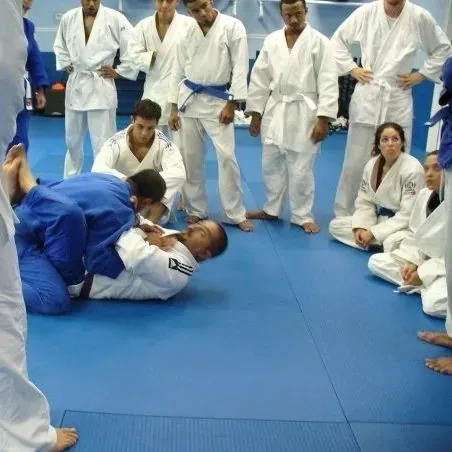
Brazilian Jiu-Jitsu is one of the safest combat sports you can practice, but like any physical activity, it carries some risk. The difference between a long, joyful journey on the mats and a frustrating cycle of setbacks usually comes down to one thing: training smart. Most common jiu-jitsu injuries are preventable with the right habits, awareness, and mindset. At Freestyle Fighting Academy in Miami, we want every student rolling for decades, not benched for months. Here is how to protect your body so you can keep showing up.
The Most Common Jiu-Jitsu Injuries
Understanding what tends to go wrong is the first step to staying healthy. The most common jiu-jitsu injuries cluster in a few predictable areas, and almost all of them respond well to prevention.
- ✦Fingers strained from gripping the gi too hard for too long.
- ✦Knees tweaked during guard work, takedowns, or aggressive escapes.
- ✦Necks compressed during stacks, scrambles, or awkward rolls.
- ✦Skin infections like ringworm and staph spread on unclean mats.
Always Warm Up Before You Roll
Cold muscles and stiff joints are far easier to injure. A proper warm up raises your heart rate, lubricates your joints, and prepares your nervous system for the demands of grappling. Spend at least ten minutes on movement drills, hip mobility, neck circles, and light flow before live training.
Warming up also gets your mind into training mode, so you roll with intention rather than crashing in cold and getting caught off guard.
Tap Early and Tap Often
Ego is responsible for a huge share of the common jiu-jitsu injuries we see. A submission is your partner telling you they had the technique, nothing more. There is no shame in tapping, and there is no medal for a torn ligament. When you feel a joint near its limit or a choke set in, tap with confidence and reset.
Tapping early keeps you healthy and on the mats. The students who progress fastest are the ones who train consistently, not the ones who refuse to submit and get hurt.
Practice Strict Mat Hygiene
Skin infections are among the most common jiu-jitsu injuries, yet they are also the most avoidable. Shower immediately after training, wash your gi after every session, and keep your nails trimmed short. Never train with an open cut left uncovered, and stay home if you suspect a skin issue so you protect your teammates too.
Communicate and Build Supporting Strength
Talk to your partners. If you are nursing a sore shoulder or a tender knee, let them know before you roll so they can flow accordingly. Good communication turns a risky scramble into a productive learning round.
Off the mat, dedicate time to strength and mobility work for your neck, knees, hips, and grip. Stronger supporting muscles absorb the stresses of grappling, and adequate rest gives your tissues time to adapt and rebuild.
Train Smart for the Long Haul at FFA
Jiu-Jitsu is a lifelong art, and longevity beats intensity every time. Warm up, tap without ego, keep clean, communicate, and respect recovery, and you will sidestep the vast majority of common jiu-jitsu injuries. At Freestyle Fighting Academy in Miami, our Brazilian Jiu-Jitsu classes are coached with safety and proper technique at the core. Ready to roll the smart way? Start your 30-day free trial at FFA and build a practice your body can enjoy for years.
Train With Us
Brazilian Jiu-Jitsu in Miami
The ground game that lets a smaller, smarter grappler control and submit a bigger opponent. Gi & no-gi, all levels.